Anonymized example project

Turning specialized data into a practical decision rule.

DataSail used AI-enabled analytical workflows to rapidly evaluate a specialized dataset, compare decision-rule options, and package the findings into a clear report a business team could act on.

Decision support Model comparison Executive-ready report

Analysis report

Bottom line

Best approach Logistic model
Accuracy 89.0%
CV AUC 0.934
Baseline cutoff 73%
Stratified rule 83%
Combined model 89%

Problem statement

Could the data support a practical decision rule?

The client had a specialized dataset and needed to know whether a continuous result could reliably predict a Positive/Negative outcome, what cutoff should be used, and whether related variables could materially improve the decision.

Solution summary

Compare the viable paths, then explain the tradeoffs.

DataSail evaluated baseline cutoff rules, stratified decision logic, grey-zone triage, and lightweight machine-learning options, then packaged the findings into a report designed for business review.

Value realized

Hundreds of hours became a focused decision-support deliverable.

The work compressed statistical analysis, model testing, report drafting, and stakeholder review into a practical recommendation that leadership could use to choose the strongest path forward.

Embedded report

The actual analytical report is part of the example.

The embedded report below preserves the original tables, Plotly charts, cutoff analysis, model comparison, grey-zone triage, and recommendation language from the project deliverable.

Open Full Report

What was done

The final report compared multiple paths instead of forcing one answer.

The analysis moved from a simple baseline rule to more sophisticated options, then explained the accuracy, interpretability, operational complexity, and validation caveats for each.

01

Baseline cutoff analysis

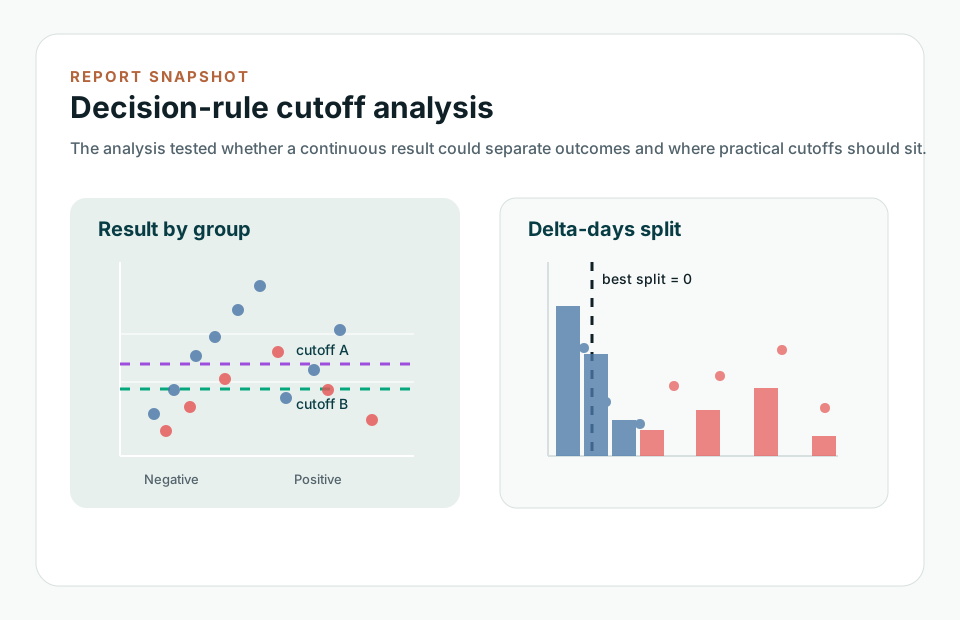
Tested whether one threshold on the core result could separate outcomes, including ROC/AUC, sensitivity, specificity, and confusion-matrix review.

02

Stratified decision rules

Compared practical rules that changed the cutoff based on available context, including time-window and demographic stratification.

03

Grey-zone triage

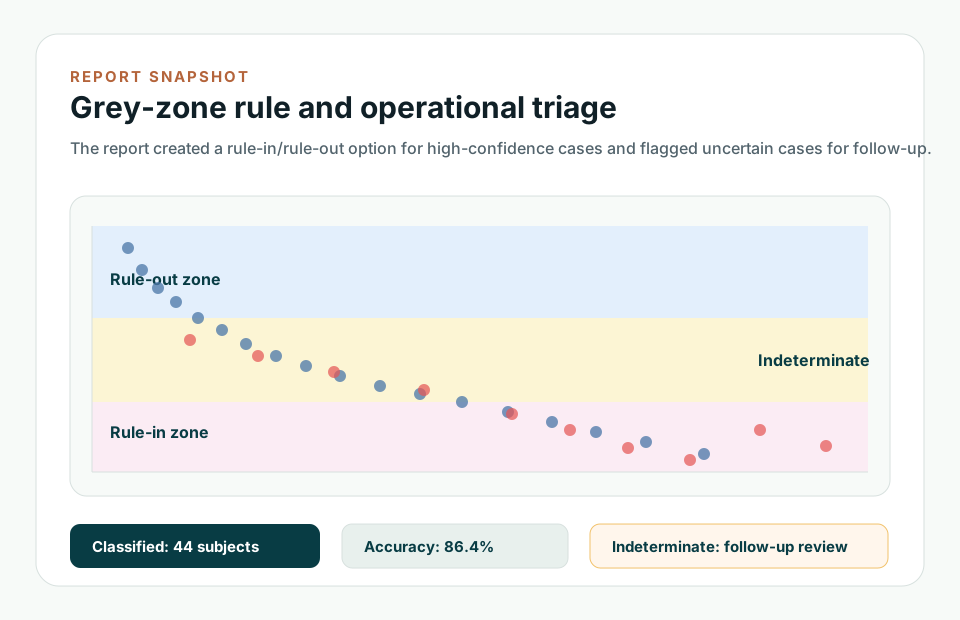
Created a rule-in/rule-out option that confidently classified the clearest cases and flagged uncertain cases for follow-up.

04

Lightweight ML comparison

Evaluated logistic regression and decision tree options using cross-validation so the recommendation was not based only on in-sample performance.

Result

A weeks-long statistical workstream became a focused decision-support deliverable.

This is the kind of work that can consume hundreds of hours across statistical analysis, model testing, report drafting, and stakeholder review. With the right AI-enabled workflow, the work was compressed into a practical analysis cycle with clear recommendations.

Baseline 73%

A simple global cutoff provided a useful starting point, but left room for improvement.

Interpretable rule 83%

A stratified cutoff improved performance while staying easy to explain and operate.

Best model 0.934

Cross-validated AUC gave the most honest single-number summary of the strongest approach.

Recommendation logic

The report gave leadership options, not just statistics.

If simplicity matters most

Use the stratified cutoff. It is interpretable, easy to implement, and does not require a model at runtime.

If maximum accuracy matters most

Use the combined model. It produced the strongest cross-validated performance and gave the clearest overall signal.

If operational triage matters most

Use the grey-zone strategy. It separates high-confidence cases from cases that deserve follow-up review.

Have a messy analytical question?

We can turn a dataset, workflow, or decision problem into a practical fixed-bid project.

Start a Conversation